What Size Motorhome Do You Really Need? A Practical Buying Guide
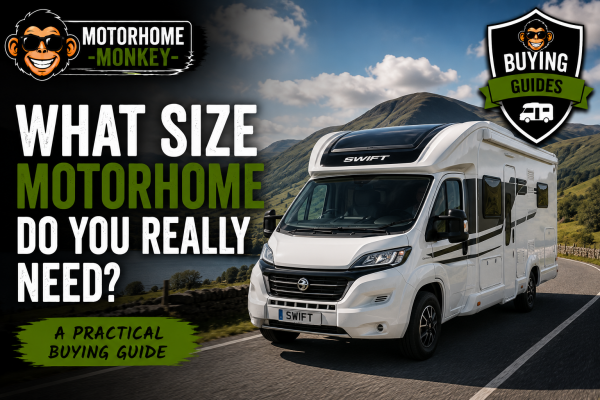
One of the biggest mistakes first-time buyers make is assuming that bigger is always better. While a larger motorhome offers more living space, it also brings compromises in driving, parking and running costs. Choosing the right size isn’t about buying the biggest motorhome you can afford—it’s about buying the one that best suits how you actually travel.
Why Size Matters
When you’re walking around a dealership, it’s easy to be impressed by spacious lounges, island beds and enormous garages.
However, remember that you’ll spend most of your time driving your motorhome rather than sitting inside it.
Every extra metre in length affects:
- Manoeuvrability.
- Parking.
- Ferry costs.
- Storage at home.
- Access to small campsites.
- Confidence behind the wheel.
The ideal motorhome strikes a balance between comfort and practicality.
Small Motorhomes (Under 6 Metres)
Compact motorhomes include many campervans and smaller coachbuilt models.
Advantages
- Easy to drive.
- Simple to park in most car parks.
- Better suited to narrow country lanes.
- Often cheaper to insure.
- Generally better fuel economy.
- Ideal for spontaneous weekend trips.
Disadvantages
- Limited storage.
- Smaller washrooms.
- Less worktop space.
- May require converting the lounge into a bed each night.
Best For
- Couples.
- Solo travellers.
- Weekend touring.
- First-time owners.
- Drivers who feel nervous about larger vehicles.
Medium Motorhomes (6–7 Metres)
This is often regarded as the “sweet spot” of the motorhome market.
You’ll usually gain:
- Permanent beds.
- Larger kitchens.
- Better washrooms.
- Increased storage.
- More comfortable living space.
Without becoming excessively difficult to drive.
Advantages
- Excellent balance of comfort and practicality.
- Suitable for extended holidays.
- Good storage capacity.
- Comfortable for two people.
Disadvantages
- Requires more care when parking.
- Slightly higher running costs.
- Larger turning circle.
Best For
- Couples.
- Longer UK and European tours.
- Owners wanting a permanent bed.
Large Motorhomes (Over 7 Metres)
Larger coachbuilt and A-Class motorhomes offer genuine home-from-home comfort.
Many include:
- Island beds.
- Large garages.
- Separate shower cubicles.
- Spacious lounges.
- Extensive storage.
They’re designed for owners who spend significant time touring.
Advantages
- Exceptional comfort.
- Plenty of storage.
- Excellent for long trips.
- Better suited to full-time touring.
Disadvantages
- More difficult to manoeuvre.
- Increased fuel consumption.
- Higher ferry and toll charges in some countries.
- Access to smaller campsites may be restricted.
Best For
- Long-term touring.
- Families.
- Extended European travel.
- Retired couples spending months on the road.
Think About Where You’ll Travel
Your touring style should influence your decision.
If you enjoy exploring Cornwall’s fishing villages, the Scottish Highlands or rural France, a smaller motorhome may prove far less stressful.
If your holidays involve staying on larger campsites for several weeks, a larger motorhome’s extra comfort may outweigh its size.
Ask yourself where you’ll spend most of your time—not where you dream of going once every few years.
Don’t Forget Payload
Size doesn’t automatically mean greater carrying capacity.
Some large motorhomes have surprisingly modest payloads once optional extras have been fitted.
Before buying, check:
- MTPLM.
- Mass in Running Order (MRO).
- Available payload.
- Weight of accessories already fitted.
A motorhome that’s overloaded isn’t just illegal—it can also affect handling and braking performance.
Think About Storage at Home
Many buyers overlook one important question.
Where will you keep it?
Before purchasing, measure:
- Your driveway.
- Garage entrance (if applicable).
- Local storage facilities.
- Width restrictions on your regular routes.
Buying a motorhome that doesn’t fit your available storage can become an expensive problem.
Consider Who’s Travelling
It’s tempting to buy for the occasional family holiday.
But ask yourself:
- How many people will normally travel?
- How often will grandchildren join you?
- Will you usually tour as a couple?
Buying for the exception rather than the rule often results in a motorhome that’s larger than you really need.
Common Buying Mistakes
Avoid these common errors:
- Buying the biggest motorhome you can afford.
- Ignoring payload limits.
- Underestimating parking difficulties.
- Forgetting storage requirements.
- Choosing a layout before considering overall length.
- Assuming you’ll “get used to” a vehicle that feels intimidating to drive.
Take your time.
The right size is the one that gives you confidence, not just comfort.
🐵 Motorhome Monkey Recommendation
Choose a Small Motorhome if…
- You mainly travel as a couple.
- You enjoy touring narrow country roads.
- Weekend breaks are your priority.
- Easy parking matters.
- You want a vehicle that’s enjoyable to drive every day.
Choose a Medium Motorhome if…
- You regularly take holidays lasting one to four weeks.
- A permanent bed is important.
- You want more storage without sacrificing manoeuvrability.
- You’re looking for the best all-round compromise.
Choose a Large Motorhome if…
- You spend several months touring each year.
- Maximum comfort is your priority.
- You carry lots of equipment.
- You regularly travel with family or guests.
- You’re comfortable driving larger vehicles.
Motorhome Monkey Verdict
There isn’t a “best” size of motorhome—only the size that’s best for your style of travel.
Many first-time buyers focus on how spacious a motorhome feels when parked on a dealer’s forecourt. Experienced owners often think differently. They know that every extra metre affects how easy the vehicle is to drive, park and enjoy.
If you’re undecided, don’t automatically choose the biggest model within your budget. Instead, choose the one you’ll feel confident driving through a Cornish fishing village, reversing onto a campsite pitch or taking on a spontaneous weekend away.
After all, the best motorhome is the one you’ll use most often.
Related Reading
You may also find these Motorhome Monkey guides helpful:
- Coachbuilt vs A-Class vs Campervan: Which Motorhome Is Right for You?
- How to Choose the Right Motorhome Layout for Your Travels
- Thinking of Buying a Motorhome? Which One Should You Buy?
- New or Used Motorhome: Which Is the Better Buy?
- Motorhome Base Vehicle Reviews
Motorhome Monkey Tip
If you’re torn between two sizes, hire each for a long weekend before making a purchase. Spending a few days driving, parking and living in different-sized motorhomes can provide valuable insights that no dealership walk-through can match, potentially saving you from an expensive mistake.