Motorcycle Helmet Myths
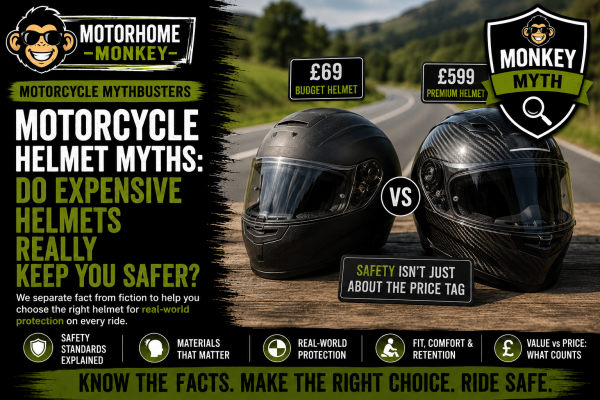
Motorcycle helmet myths often lead riders to believe that spending more money automatically means better protection. While premium helmets offer many advantages, does a higher price really make them safer? In this edition of Motorcycle Mythbusters, we separate marketing from reality.
The Myth
“The more expensive the helmet, the safer it is.”
Walk into any motorcycle dealership and you’ll find helmets ranging from under £100 to well over £1,000.
It’s easy to assume the most expensive model must also be the safest.
After all, if a helmet costs five times as much, surely it offers five times the protection?
The reality is rather more interesting.
Every Helmet Must Meet Safety Standards
Before any motorcycle helmet can legally be sold for road use in the UK, it must meet recognised safety standards.
Most modern helmets carry the latest ECE 22.06 approval, one of the world’s toughest motorcycle helmet testing standards.
To achieve certification, helmets undergo rigorous testing for:
- Impact absorption
- Penetration resistance
- Retention strap strength
- Field of vision
- Rotational impact performance
- Chin bar strength (where applicable)
If a helmet passes these tests, it has demonstrated that it provides an approved level of protection.
Whether it costs £120 or £800, it must meet those minimum requirements.
So Why Do Premium Helmets Cost More?
This is where many riders become confused.
Higher prices are usually paying for improvements in comfort and refinement rather than dramatically higher crash protection.
Premium helmets often feature:
- Lightweight carbon fibre or composite shells
- Improved ventilation systems
- Better aerodynamic performance
- Lower wind noise
- Superior visor mechanisms
- Higher-quality interior materials
- More effective moisture management
- Greater long-distance comfort
These features make riding more enjoyable, particularly during long touring days.
They don’t necessarily mean the helmet is significantly safer in every crash.
Fit Is More Important Than Price
Perhaps the biggest mistake riders make is concentrating on the price tag instead of the fit.
A £700 helmet that doesn’t fit properly may offer less real-world protection than a £180 helmet that fits perfectly.
A correctly fitting helmet should feel snug all around your head without creating painful pressure points.
It shouldn’t move excessively when you shake your head, and the chin strap should hold it securely in place.
Many experienced riders would argue that finding the right fit is the single most important factor when buying a helmet.
Think About Your Riding
Your riding style should also influence your choice.
If you’re commuting short distances every day, a comfortable, well-ventilated helmet may be all you need.
If you’re planning long European tours on your motorcycle, investing in a quieter helmet with better aerodynamics could significantly reduce fatigue.
In both cases, the “best” helmet isn’t necessarily the most expensive—it’s the one that best suits the way you ride.
Don’t Ignore Helmet Age
Another myth is that helmets last forever.
In reality, manufacturers generally recommend replacing a helmet after around five to seven years of regular use, depending on its condition and the manufacturer’s guidance.
Materials naturally degrade over time, while repeated exposure to sunlight, sweat and daily wear gradually affects the helmet’s performance.
If a helmet has been involved in a significant impact, it should always be replaced, even if no damage is visible.
Myth Verdict
❌ MYTH BUSTED
Expensive motorcycle helmets don’t automatically make you safer.
Every road-legal helmet sold in the UK must meet strict safety standards.
What you’re often paying extra for is improved comfort, lower weight, better ventilation and premium features.
Choose a helmet that fits correctly, carries the latest recognised safety approval and suits the type of riding you enjoy.
Because when it comes to motorcycle safety, the best helmet isn’t always the most expensive one—it’s the one that fits you properly and you’ll happily wear on every ride.