How to Prevent Damp in Your Motorhome: A Practical Guide
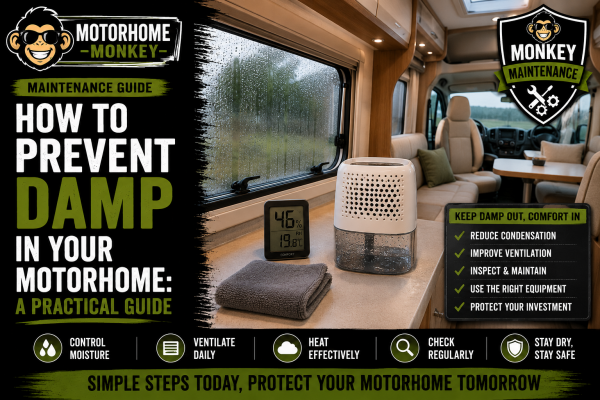
Learning how to prevent damp in your motorhome is one of the most important aspects of ownership. Left untreated, damp can cause expensive structural damage, unpleasant odours and even reduce your motorhome’s resale value. Fortunately, a few simple maintenance habits can help keep your motorhome dry and protected all year round.
Why Damp Is Every Motorhome Owner’s Biggest Enemy
Ask any experienced motorhome owner what they fear most, and there’s a good chance they’ll answer with one word—damp.
Mechanical problems can usually be repaired. Appliances can be replaced. Even cosmetic damage can often be put right without too much difficulty.
Damp is different.
Because it often develops slowly and out of sight, it can remain unnoticed for months or even years. By the time soft walls, stained ceilings or musty smells appear, significant damage may already have occurred.
The good news is that damp is often preventable with regular inspections and a little routine maintenance.
What Causes Damp?
Motorhomes spend their lives exposed to the elements.
Rain, frost, heat and UV light all take their toll on sealants, roof joints and body panels.
Over time, the seals around rooflights, windows, awnings, marker lights and service hatches can begin to deteriorate.
Water doesn’t need a large opening to cause problems. A tiny gap is often enough for moisture to enter, particularly during prolonged periods of wet weather.
Once inside, water can soak into timber frameworks, insulation and wall panels where it may remain hidden for a long time.
Carry Out Regular Visual Checks
You don’t need specialist equipment to spot the early warning signs.
Every few weeks, take a slow walk around your motorhome and inspect:
- Rooflights
- Windows
- External lockers
- Roof seams
- Awning rails
- Marker lights
- Satellite and solar panel fixings
Look for cracked sealant, loose trim or signs of damage.
Inside the motorhome, pay attention to discoloured wall coverings, soft panels, bubbling wallpaper and unexplained musty smells.
The earlier you spot a problem, the cheaper it’s likely to be to repair.
Don’t Forget the Roof
Out of sight often means out of mind.
The roof is one of the most common places for water ingress to begin, yet many owners rarely inspect it.
If it’s safe to do so, check the roof several times a year for cracked sealant, damaged rooflights or debris trapped around fittings.
Leaves and moss can hold moisture against seals for long periods, so keeping the roof clean is worthwhile.
Ventilation Is Just as Important
Not all damp comes from leaks.
Condensation caused by cooking, showering and even breathing can introduce surprising amounts of moisture into a motorhome.
Good ventilation is essential.
Open roof vents whenever practical, use extractor fans while cooking and avoid drying wet clothes inside whenever possible.
These simple habits help reduce condensation and the risk of mould forming.
Invest in Annual Habitation Checks
One of the best investments you can make is an annual habitation service.
Professional technicians use moisture meters to detect hidden damp long before it becomes visible.
Although there’s a cost involved, identifying a small leak early could save thousands of pounds in structural repairs later.
Many manufacturers also require regular habitation inspections to maintain water ingress warranties.
Storage Matters Too
If your motorhome spends long periods in storage, don’t simply lock the door and forget about it.
Visit regularly.
Open windows and roof vents where appropriate, remove soft furnishings if practical and check for signs of moisture after periods of heavy rain.
A few minutes every month can prevent a much larger repair bill in the future.
Motorhome Monkey Verdict
Preventing damp isn’t about carrying out complicated maintenance—it simply requires regular observation and a little preventative care.
A quick inspection before and after every trip, combined with an annual habitation check, will significantly reduce the likelihood of expensive water damage.
When it comes to motorhome ownership, few maintenance jobs offer a better return for the time invested than keeping damp at bay.