How to Carry Out Your Own Damp Check Before Buying a Used Motorhome
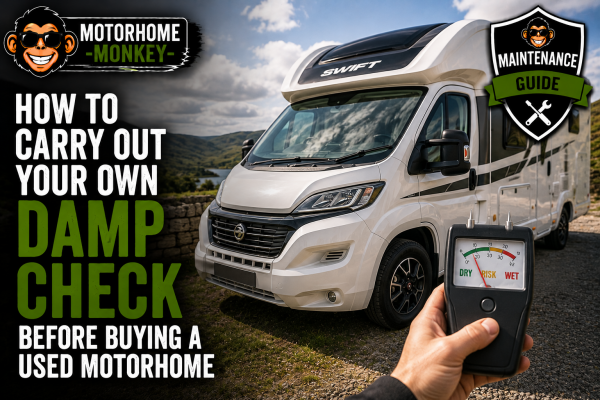
Buying a used motorhome can save thousands of pounds, but hidden damp damage has the potential to turn a bargain into an expensive mistake. While a professional habitation inspection offers the most comprehensive assessment, there are several checks you can carry out yourself before making a purchase. This guide explains how to perform a sensible Motorhome Damp Check, recognise common warning signs and know when it’s time to seek expert advice.
Why damp should be your biggest concern
Every used motorhome will have signs of wear, but damp is different.
Water ingress can remain hidden for months or even years before obvious damage appears. By the time wallpaper begins to bubble or walls feel soft, moisture may already have affected the structure behind them.
That’s why checking for damp should be one of your highest priorities when viewing any used motorhome.
Start with the outside
Before stepping inside, walk slowly around the vehicle.
Pay particular attention to:
- Rooflights.
- Windows.
- Doors.
- External lockers.
- Service hatches.
- Awning rails.
- Roof-mounted accessories.
- Body joints.
Look for cracked sealant, uneven repairs, missing trim or evidence that sections have been resealed.
Fresh sealant isn’t necessarily a problem—but it’s worth asking why the work was carried out.
Look for signs of previous repairs
Repairs aren’t always a cause for concern if they’ve been completed professionally.
However, be cautious if you notice:
- Mismatched wall coverings.
- Different coloured sealant.
- New panels alongside older ones.
- Staining that appears to have been painted over.
- Silicone sealant where manufacturer sealant would normally be expected.
Ask the seller to explain any repair work and request supporting paperwork where available.
Use your sense of smell
One of the first clues can be your nose.
A musty smell doesn’t automatically mean the motorhome has serious damp, but it should encourage a closer inspection.
Don’t be distracted by strong air fresheners or recently cleaned interiors.
If possible, inspect the motorhome when it’s been closed up for several hours, as damp odours are often more noticeable.
Feel the walls
Gently press around:
- Window frames.
- Rooflights.
- External corners.
- Behind seating.
- Inside cupboards.
- Around the washroom.
The walls should feel firm.
Softness, movement or a spongy feel may indicate moisture damage beneath the surface.
Don’t press excessively hard—you don’t want to damage the vehicle during an inspection.
Check inside cupboards and lockers
Moisture often develops in places that aren’t seen every day.
Open every cupboard and locker.
Look for:
- Black mould.
- Staining.
- Swollen wood.
- Discoloured wallboard.
- Rusted screws.
- Peeling wall coverings.
Upper lockers against external walls deserve particular attention.
Lift the mattresses
Mattresses can trap moisture against exterior walls.
Lift them and inspect:
- Bed bases.
- Wall panels.
- Corner joints.
- Under-bed storage areas.
Any signs of mould or staining deserve further investigation.
Inspect the floor
Walk throughout the motorhome.
The floor should feel solid beneath your feet.
Be alert for:
- Soft patches.
- Springy areas.
- Uneven flooring.
- Signs of previous repairs.
Pay particular attention around the entrance door, washroom and kitchen, where water is more likely to be present.
Should you use a damp meter?
A moisture meter can be useful, but it’s not a guarantee.
Basic meters available online can provide an indication of elevated moisture levels, but they are not specifically designed for every type of motorhome construction. Metal framing, wiring and composite materials can also affect readings.
If you choose to use one:
- Follow the manufacturer’s instructions.
- Take readings in several locations.
- Compare similar areas rather than relying on a single measurement.
- Treat unusual readings as a reason for further investigation—not as definitive proof of damp.
Ask the right questions
A careful inspection should always be supported by good questions.
Ask the seller:
- Has the motorhome ever had damp repairs?
- Are habitation check reports available?
- When was it last inspected?
- Has any resealing work been carried out?
- Has the vehicle ever suffered accident damage?
- Has it ever been stored outside all year?
A genuine seller should answer honestly and provide supporting documentation where available.
Know when to walk away
Sometimes it’s better to leave than take a risk.
Consider walking away if you discover:
- Widespread soft walls.
- Extensive mould.
- Strong persistent damp smells.
- Missing service history combined with visible signs of water ingress.
- A seller unwilling to answer reasonable questions.
There will always be another motorhome.
Buying the wrong one can become an expensive lesson.
When should you arrange a professional inspection?
If you’re seriously considering buying a used motorhome, especially through a private sale, an independent habitation inspection is money well spent.
A qualified inspector has the equipment and experience to identify hidden problems that may not be obvious during a visual inspection.
The cost of an inspection is often small compared with the potential cost of repairing significant water damage.
🐵 Motorhome Monkey Recommendation
A visual Motorhome Damp Check should form part of every viewing, no matter how tidy or well-presented the vehicle appears.
Carry out your own inspection first, but don’t rely on it alone when making a major purchase. If you’re in any doubt, arrange an independent habitation check before committing to buy.
A little caution today could save thousands of pounds tomorrow.
Motorhome Monkey Verdict
Buying a used motorhome should be exciting, not stressful.
By taking the time to inspect the vehicle carefully, asking sensible questions and recognising the warning signs of damp, you’ll greatly reduce the risk of buying a motorhome with hidden problems.
No visual inspection can guarantee a motorhome is completely free from damp, but a methodical approach—combined with a professional habitation check where appropriate—gives you the best possible chance of making a confident purchase.
Related Reading
- Motorhome Damp: How to Spot It, Prevent It and Avoid Costly Repairs
- Motorhome Habitation Checks Explained: What They Cover and Why They Matter
- Motorhome Condensation: Causes, Prevention and the Best Ways to Stop Damp
- Buying a Motorhome: Dealer or Private Seller?
- New or Used Motorhome: Which Is the Better Buy?
🐵 Motorhome Monkey Tip
When viewing a used motorhome, don’t feel pressured into making a decision on the spot. A reputable seller should be happy for you to spend time inspecting the vehicle thoroughly and arranging an independent habitation check if you wish. Walking away from a questionable purchase is far cheaper than paying for major damp repairs later.