Buying a Motorhome: Dealer or Private Seller?
Once you’ve decided to buy a motorhome, another important decision awaits: should you buy from a dealer or directly from a private seller? Both routes have advantages and disadvantages, and understanding them before you part with your money could save you time, stress and potentially thousands of pounds. This guide explains what to expect from each option and how to decide which is right for you.
Why Your Choice Matters
Motorhomes are expensive purchases, whether you’re spending £15,000 or £150,000.
Where you buy your motorhome can affect:
- The price you pay.
- Your legal rights.
- The level of support after the sale.
- The risks involved.
- Your confidence as a buyer.
There’s no single “best” option, but there is usually one that’s better suited to your experience and circumstances.
Buying From a Dealer
For many first-time buyers, a reputable dealer offers reassurance.
Most dealers inspect, prepare and service vehicles before sale, and many include warranties or guarantee schemes.
You’ll also benefit from stronger legal protection than you would when buying privately.
Advantages
- Greater consumer protection.
- Warranty often included.
- Part exchange available.
- Finance options.
- Vehicles usually prepared before sale.
- Opportunity to compare several motorhomes in one location.
Things to Consider
That reassurance comes at a price.
Dealer vehicles are usually more expensive than equivalent private sales.
You may also find less room for negotiation, particularly during busy periods.
Not all dealers are equal, so it’s worth checking reviews and asking plenty of questions before committing.
Buying Privately
Private sellers often offer excellent value.
Without dealership overheads, prices can be significantly lower.
Many private owners also know their motorhome extremely well and can provide valuable insight into its history, modifications and quirks.
A well-looked-after privately owned motorhome can be an excellent purchase.
Advantages
- Lower purchase price.
- Direct knowledge from the owner.
- Often well documented.
- Greater scope for negotiation.
The Risks of Buying Privately
Private sales require more caution.
Unlike dealer purchases, you generally have fewer legal remedies if problems emerge after the sale.
It’s therefore essential to carry out your own checks.
Always inspect:
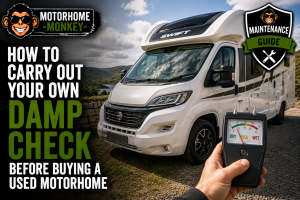
- Damp levels.
- Service history.
- Habitation records.
- MOT history.
- Tyre condition and age.
- Appliance operation.
- Ownership documentation.
If you’re unsure, consider paying for an independent inspection before buying.
Questions to Ask
Whether buying privately or from a dealer, don’t be afraid to ask questions.
Useful examples include:
- Why are you selling?
- How long have you owned it?
- Has it ever suffered water ingress?
- When was the last habitation service?
- Has it been weighed with accessories fitted?
- Have any warranty repairs been carried out?
- Are all manuals and spare keys included?
A genuine seller should have no difficulty answering reasonable questions.
Watch for Warning Signs
Proceed carefully if you notice:
- Incomplete paperwork.
- Pressure to make a quick decision.
- Missing service history.
- Obvious damp or musty smells.
- Reluctance to answer questions.
- Prices that seem unusually low compared with similar vehicles.
If something doesn’t feel right, trust your instincts and walk away.
Should You Get an Independent Inspection?
For many buyers, especially first-time owners, the answer is yes.
An independent inspection can identify issues that aren’t immediately obvious, including hidden damp, bodywork repairs and mechanical faults.
While it adds to the upfront cost, it may save far more in unexpected repair bills.
Dealer vs Private at a Glance
| Dealer | Private Seller |
|---|---|
| Higher purchase price | Usually lower purchase price |
| Consumer protection | Limited legal protection |
| Warranty often included | Usually sold as seen |
| Finance available | Cash or bank transfer normally required |
| Part exchange possible | Must sell your existing vehicle separately |
| Professional preparation | Condition depends on previous owner |
🐵 Motorhome Monkey Recommendation
Buy From a Dealer If…
- This is your first motorhome.
- You value a warranty.
- You want finance options.
- You’d like support after the purchase.
- Peace of mind is your priority.
Buy Privately If…
- You’re confident inspecting vehicles.
- You understand motorhomes.
- You’re looking for the best value.
- You’re happy to arrange independent inspections.
- You don’t mind doing more research.
Motorhome Monkey Verdict
There’s no right or wrong place to buy a motorhome.
Many excellent motorhomes are sold through dealerships, while countless others are cherished privately owned vehicles that have been meticulously maintained.
The important thing isn’t who is selling the motorhome—it’s whether you have enough information to buy with confidence.
Take your time, ask plenty of questions and never feel pressured into making a decision.
The right motorhome will still be the right motorhome tomorrow.
Related Reading
You may also enjoy:
- New or Used Motorhome: Which Is the Better Buy?
- Motorhome Payload Explained: How Much Payload Do You Really Need?
- What Size Motorhome Do You Really Need?
- How to Choose the Right Motorhome Layout for Your Travels
- Thinking of Buying a Motorhome? Which One Should You Buy?
🐵 Motorhome Monkey Tip
Before viewing any used motorhome, ask the seller not to warm up the engine before you arrive. Starting the engine from cold allows you to assess how easily it starts, listen for unusual noises and observe any smoke from the exhaust—things that can be harder to detect if the engine is already warm.