Motorhome Air Suspension Guide: Is It Worth the Investment?
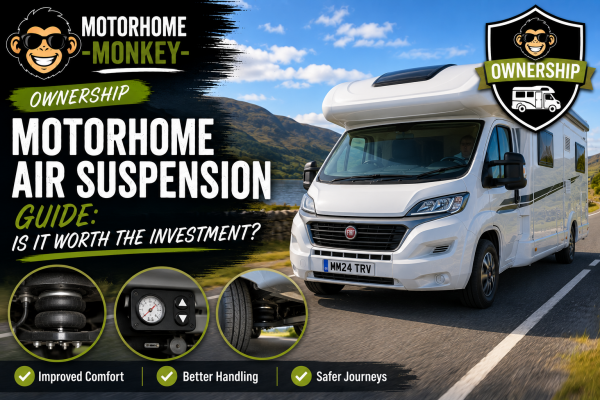
Motorhome air suspension has become one of the most popular upgrades for owners looking to improve comfort, handling and stability. But what exactly is it, how does it work, and is it really worth the investment? In this guide, we explain everything you need to know before deciding whether air suspension is the right upgrade for your motorhome.
More Than Just a Luxury Upgrade
If you’ve spent any time on motorhome forums or Facebook groups, you’ve probably noticed air suspension being recommended time and time again. Owners often describe it as one of the best upgrades they’ve ever made, claiming it transforms the way their motorhome drives.
That’s quite a statement.
After all, air suspension isn’t a cheap accessory. Depending on the type of system fitted, you’re likely to spend anywhere from £1,000 for a basic rear air-assist system to several thousand pounds for a fully integrated four-corner installation.
So, is the improvement really that significant?
The answer depends largely on your motorhome, how you use it and what you’re hoping to achieve.
What Is Motorhome Air Suspension?
In simple terms, air suspension uses inflatable rubber air bellows to supplement or, in some cases, replace parts of the vehicle’s standard suspension.
Compressed air is used to inflate the bellows, allowing the suspension to better support the weight of the motorhome.
Many aftermarket systems are designed as air-assist suspension, meaning they work alongside the existing leaf springs rather than replacing them completely.
More advanced installations may replace much of the original suspension system altogether, offering greater adjustment and ride control.
Why Do Owners Fit Air Suspension?
There are several reasons why owners decide to invest in motorhome air suspension.
The most common is improved comfort.
Motorhomes often operate close to their maximum permitted weight, particularly when loaded for long holidays. Standard suspension can sometimes feel harsh over uneven roads, transmitting bumps and potholes into the living area.
Air suspension helps absorb many of these impacts, resulting in a smoother, more composed ride.
Another major benefit is improved stability.
Crosswinds, passing HGVs and uneven road surfaces can all unsettle a tall motorhome. Air suspension helps reduce body roll and gives many drivers greater confidence, particularly on long motorway journeys.
Better Handling and More Confidence
One of the biggest compliments owners give after fitting air suspension is that the motorhome simply feels more planted on the road.
Steering often becomes more predictable, cornering feels more controlled and the vehicle is less prone to excessive leaning when negotiating roundabouts or country lanes.
It’s important to be realistic, though.
Air suspension won’t turn a seven-metre coachbuilt motorhome into a sports car.
What it does do is make the vehicle feel calmer and more composed, which reduces driver fatigue over longer journeys.
For many owners, that’s worth every penny.
Air Suspension Isn’t a Levelling System
This is where some confusion arises.
Many people assume air suspension can completely replace levelling ramps or automatic levelling systems.
In reality, they’re designed for different purposes.
Air suspension is primarily intended to improve ride quality and handling while allowing minor ride-height adjustments.
It may help compensate for slight differences in ground level when parked, but it’s not designed to level a motorhome on a significantly sloping pitch.
If automatic levelling is your priority, systems such as the TESA AutoLift are designed specifically for that purpose.
Think of air suspension as a driving upgrade and an automatic levelling system as a campsite convenience.
Some owners choose to install both.
Is It Suitable for Every Motorhome?
Not necessarily.
Older motorhomes with tired suspension often benefit noticeably from air-assist systems, particularly if they regularly carry heavy loads.
Larger coachbuilt and A-Class motorhomes also tend to show the greatest improvements because of their higher centre of gravity.
Smaller campervans, on the other hand, may already provide a comfortable driving experience without requiring additional suspension upgrades.
As with any modification, it’s worth considering how you actually use your motorhome.
What About Cost?
Air suspension represents a significant investment, so it’s worth thinking carefully about your priorities.
If you’re mainly taking occasional weekend breaks and are happy with the way your motorhome drives, the money might be better spent elsewhere.
However, if you regularly tour the UK and Europe, spend long days behind the wheel or find your current suspension uncomfortable, the improvement in comfort and confidence could make it one of the most rewarding upgrades you ever buy.
Should You Fit It Yourself?
Most air suspension systems should be professionally installed.
Correct fitting is essential to ensure the suspension performs safely and reliably, and a specialist installer will also be able to recommend the most appropriate system for your particular motorhome.
It’s also worth discussing your typical loading and touring habits, as these can influence the specification that’s best suited to your vehicle.
Motorhome Monkey Verdict
There’s no escaping the fact that motorhome air suspension is a premium upgrade.
It’s not essential, and many owners tour perfectly happily without it.
However, if you’ve ever found your motorhome unsettled by crosswinds, uncomfortable on rough roads or tiring to drive over long distances, air suspension could genuinely transform your touring experience.
Will it make every journey smoother?
Almost certainly.
Will it be worth the investment?
For many experienced motorhome owners, the answer is an emphatic yes.
Like many of the best upgrades, it’s one of those things you may not think you need—until you’ve driven a motorhome that’s fitted with it.