Motorhome Weight Limits Explained: Understanding Payload and Safety
Motorhome weight limits explained simply can help owners travel safely and avoid expensive fines. Understanding payload and vehicle limits is essential for responsible touring.
For many new motorhome owners, vehicle weight limits can feel confusing. Yet understanding them is essential for both safety and legality. This guide to motorhome weight limits explained will help you understand how payload works and why it matters when travelling.
Every motorhome has a Maximum Authorised Mass (MAM). This is the maximum weight the vehicle can legally weigh when fully loaded. It includes the motorhome itself, passengers, water, fuel, luggage, and any accessories.
The difference between the vehicle’s empty weight and its maximum authorised mass is known as the payload.
Payload often disappears faster than owners expect. Filling the water tank, adding bikes, outdoor furniture, clothing, food supplies, and passengers can quickly bring the motorhome close to its limit.
This is why understanding motorhome weight limits explained is so important before setting off on longer trips.
Exceeding weight limits can lead to several problems. First, it may invalidate your insurance if you are involved in an accident. Second, it can affect braking performance and handling. Finally, roadside inspections can result in fines if the vehicle is found to be overweight.
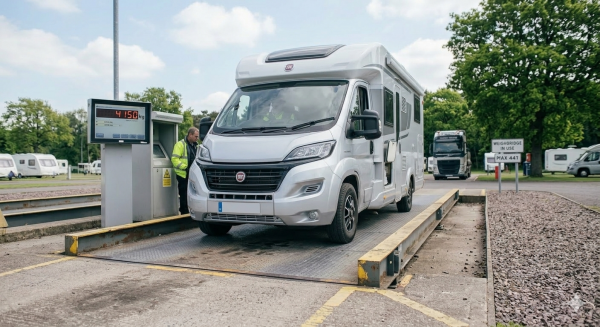
Many motorhome owners choose to visit a public weighbridge when fully packed for a trip. This gives an accurate understanding of how much capacity remains.
Another important factor is axle weight limits. Even if the total weight is within the vehicle limit, one axle may still be overloaded if cargo is unevenly distributed.
Spreading heavy items evenly throughout the vehicle improves balance and safety.
Understanding motorhome weight limits explained ultimately comes down to responsible preparation. A well-balanced motorhome is safer to drive and more enjoyable on long journeys.
Motorhome travel should be relaxing — not worrying about whether you’re carrying too much.